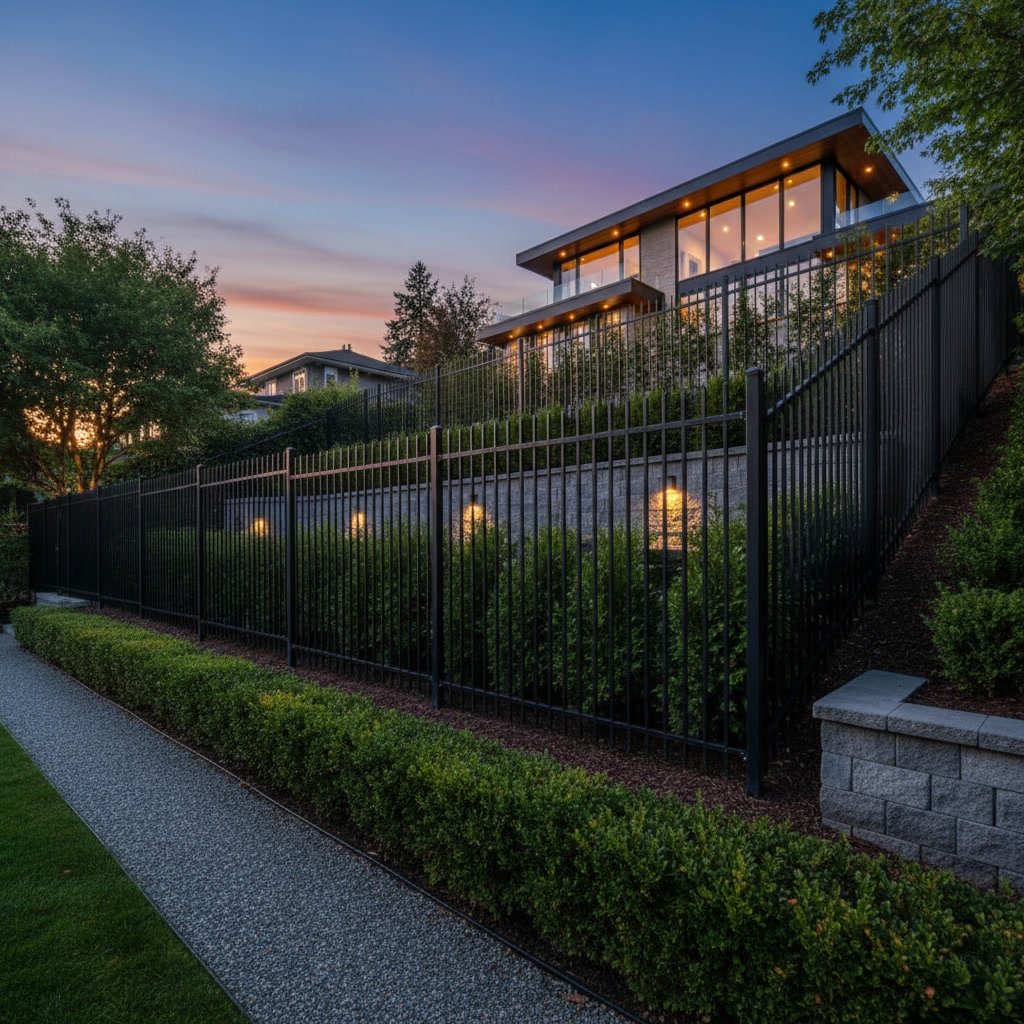
Installing a fence for sloped yard terrain requires careful planning and the right approach to achieve both function and visual appeal. The two primary methods are racked fencing, where panels follow the slope in a parallel line, and stepped fencing, where level panels create a staircase effect down the hill. Your choice depends on the degree of slope, your budget, the fence material, and your aesthetic preferences.
Why Sloped Terrain Changes Your Fencing Options
A level yard allows you to install almost any fence style with minimal adjustment. Sloped ground introduces complications that affect cost, installation time, and the structural integrity of the finished product. Slopes greater than 15 degrees often require custom measurements, additional posts, and specialized hardware to keep the fence stable over time.
Water runoff becomes a critical factor on slopes. Poor drainage can erode soil around fence posts, leading to leaning or collapse within a few seasons. The grade also affects how much of your fence is visible from the street and whether gaps form at ground level.
Understanding Racked Fencing for Gradual Slopes
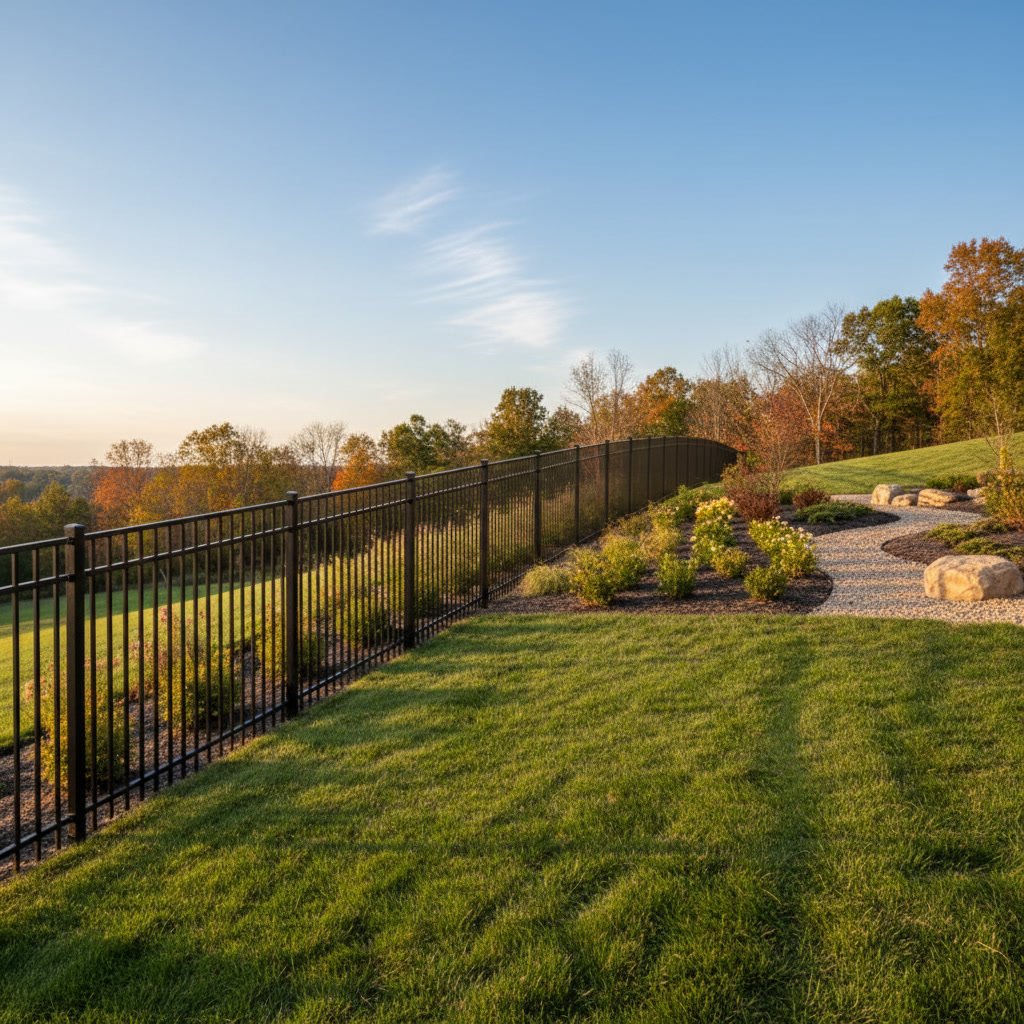
Racked fencing follows the natural contour of your land. Each panel or section tilts to match the slope, creating a smooth, continuous line from top to bottom. This method works best on gradual slopes of 5 to 10 degrees where the grade is relatively consistent.
Picket fences, chain link, and ornamental metal fences adapt well to racking because the individual vertical elements can be trimmed or adjusted at different heights. Solid wood panel fences can also be racked, but the angled top rail may look awkward if the slope is too steep.
Racked fences typically cost less than stepped versions because they require fewer posts and less custom cutting. However, they leave triangular gaps at the bottom where the fence meets the ground, which may concern you if you have pets or small children.
When Stepped Fencing Makes More Sense
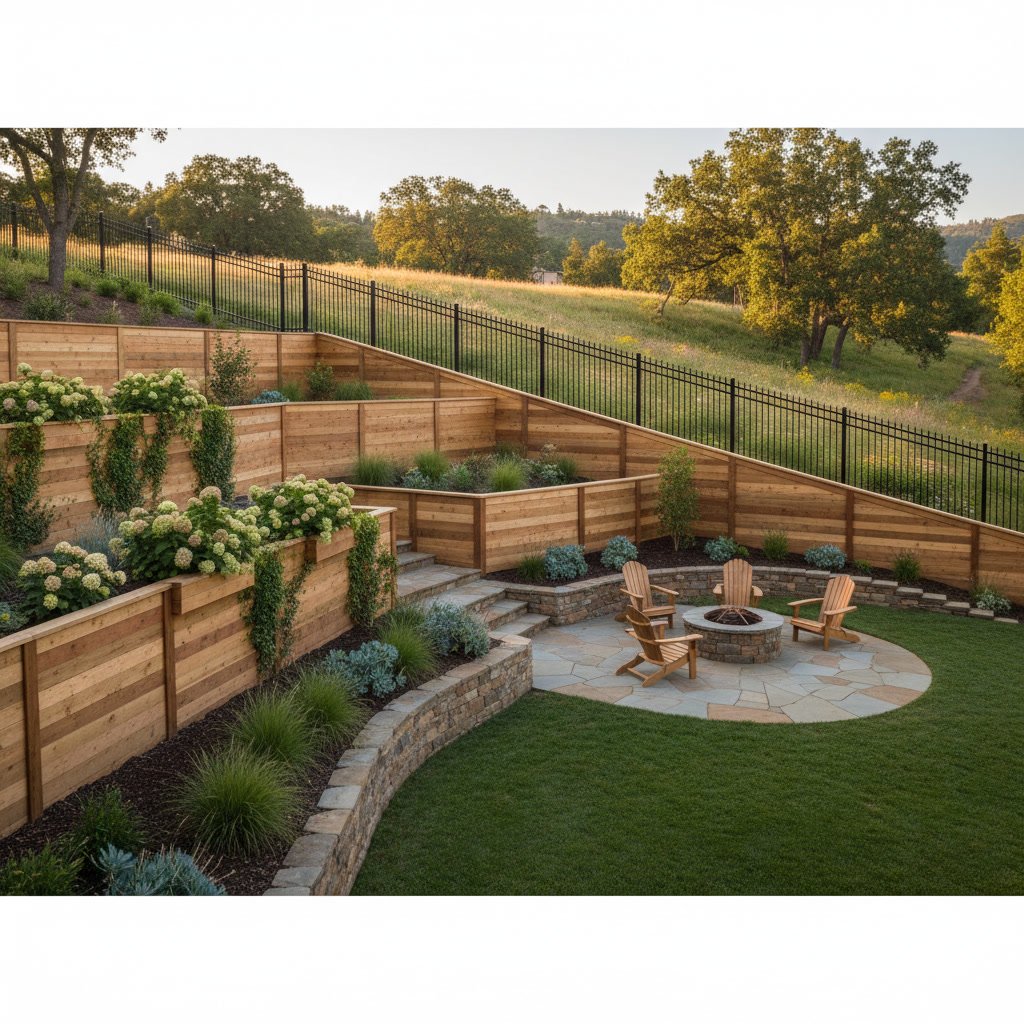
Stepped fencing installs each panel or section level to the horizon, then drops down to the next level in a stair-step pattern. This approach suits steeper slopes above 10 degrees and creates a more traditional, symmetrical appearance from the side.
Solid privacy fences, horizontal slat designs, and prebuilt panels work best with the stepped method because they maintain their intended look when installed level. Each step requires precise measurement to ensure consistent panel heights and post spacing.
Stepped fences eliminate ground-level gaps at the panel faces, though you may still see openings where the steps transition. The method demands more material and labor, often increasing your total cost by 20 to 40 percent compared to racking on the same slope.
Material Choices That Adapt to Uneven Ground
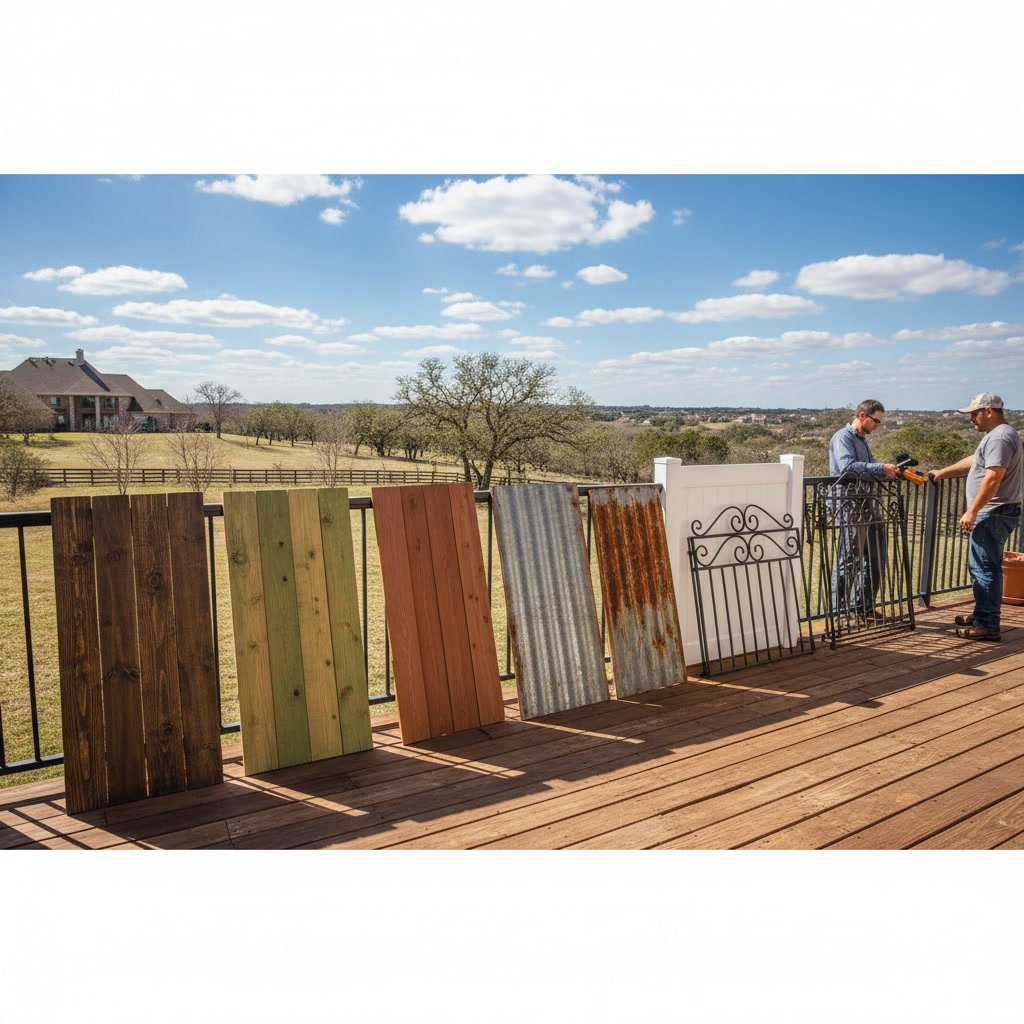
Not all fence materials handle slopes equally. Chain link offers the most flexibility, easily racking or stepping to match almost any grade. Vinyl fencing systems often include specialty brackets designed for slopes, though you’ll pay more for these components.
Wood remains the most versatile option for custom slopes. Carpentry skills allow installers to trim pickets, adjust rail angles, and modify panels to fit irregular terrain. Cedar and pressure-treated pine hold up well in Texas climates, though you’ll want to learn proper preparation techniques for staining and sealing to maximize lifespan.
Composite materials provide low maintenance but limited adjustability. Most manufacturers design their systems for level ground, and modifying composite panels for slopes can void warranties or compromise structural integrity.
Measuring Slope Grade Before You Plan
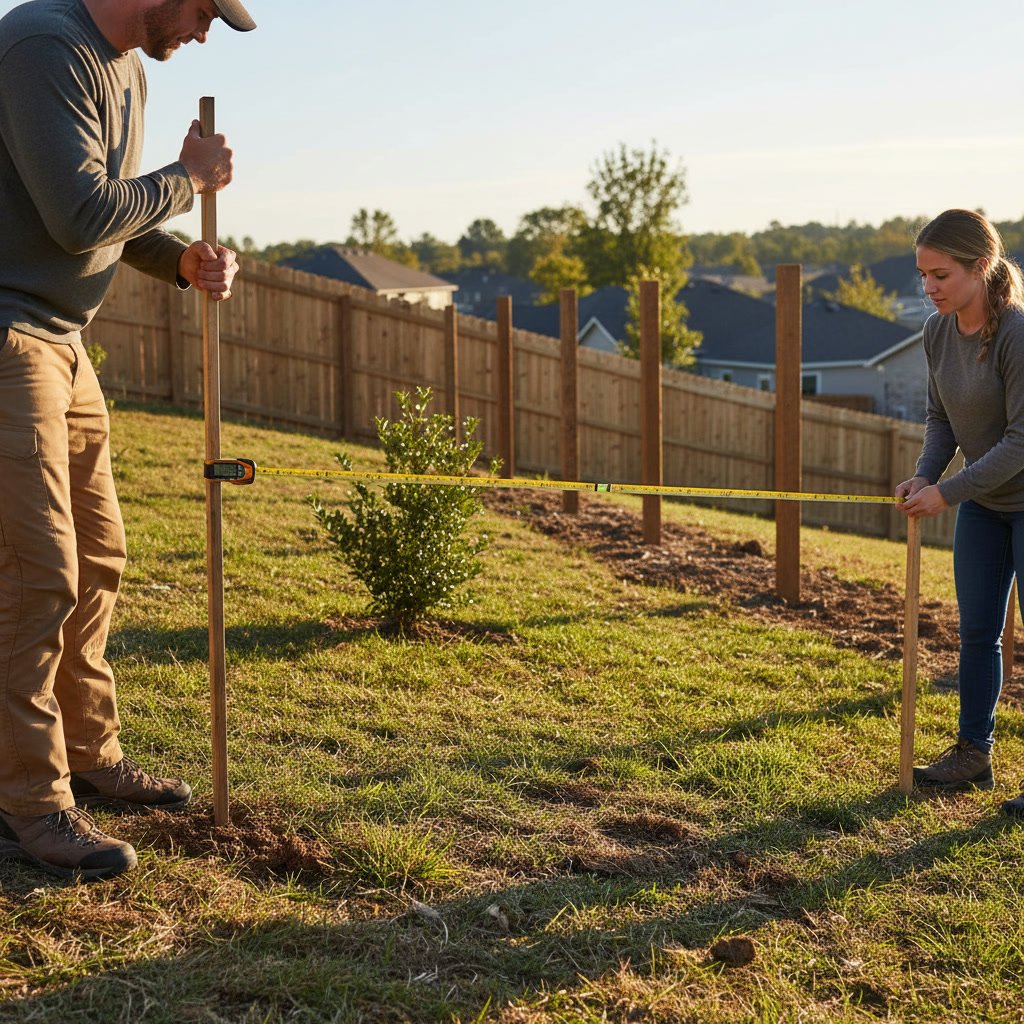
You need accurate slope measurements before choosing a fence style. A simple method uses a long level, a tape measure, and two stakes. Place one stake at the top of the slope and another at the bottom. Hold the level horizontally from the upper stake and measure the vertical distance down to ground level at the point where the level intersects the lower area.
Divide the vertical drop by the horizontal distance, then multiply by 100 to get the slope percentage. A 10-foot run with a two-foot drop equals a 20 percent grade, steep enough to require stepped panels or significant racking adjustments.
For properties in Allen with complex grades, professional survey tools provide the precision needed to plan post placement and estimate material quantities accurately.
Post Placement and Depth Considerations
Standard fence posts embed 24 to 30 inches deep on level ground. Sloped terrain often requires deeper placement on the downhill side to compensate for reduced soil coverage and increased lateral pressure. Uphill posts may need less depth, but maintaining consistent depth throughout improves overall stability.
Space posts closer together on steep slopes. Where you might place posts eight feet apart on flat land, reducing spacing to six feet on a slope distributes stress more evenly and prevents sagging between supports.
Concrete footings become essential on slopes greater than 15 degrees. The extra weight anchors posts against soil movement during heavy rain or freeze-thaw cycles common in North Texas winters.
Drainage and Erosion Prevention Strategies
A fence on sloped ground can redirect water flow and create erosion channels if you don’t plan drainage. Avoid solid fences that block water entirely, forcing runoff to pool or carve new paths around posts.
Gravel trenches along the fence line allow water to percolate through rather than undermining your foundations. French drains work well for severe slopes where runoff concentrates in specific areas.
Ground cover plants and mulch between the fence and surrounding soil help stabilize the grade. Grass alone may not hold on steep inclines, especially during dry Texas summers when roots weaken.
Comparing Costs Between Racked and Stepped Styles
Budget differences between racking and stepping add up quickly. Racked fences require fewer cuts, less custom hardware, and faster installation, translating to lower labor charges. A 100-foot racked wood fence on a moderate slope might cost $2,500 to $3,500 installed.
The same run using stepped panels could reach $3,500 to $5,000 due to additional posts, longer installation time, and waste from trimming panels to fit each level. Steeper slopes amplify these differences as the number of steps increases.
Material choice also shifts the equation. Chain link racking adds minimal cost over level installation, while vinyl stepped systems may double your expense compared to flat-ground pricing.
Privacy and Security on Sloped Properties
Racked fences create gaps at ground level that reduce privacy and allow small animals to pass through. If security matters, plan to add wire mesh, dig trenches for buried boards, or landscape with dense shrubs along the fence line.
Stepped fences maintain better privacy along the panel faces but leave openings at the step transitions. Custom trim boards or overlapping panels at steps can close these gaps, though they add to your final cost.
Consider sight lines from both inside and outside your property. A fence that looks solid from your patio may reveal gaps when viewed from the street or neighboring yards at different elevations.
Local Regulations and Permit Requirements
Cities throughout the Dallas area enforce specific fence height limits, setback distances, and material restrictions that apply regardless of slope. Some municipalities measure fence height from the original grade, while others use the finished elevation after grading or drainage work.
Slope calculations can affect these measurements. A six-foot fence on level ground may exceed height limits on the downhill side if local code measures from the lowest adjacent grade. Verify rules with your city before purchasing materials or starting work.
Homeowner associations add another layer of requirements. Many HOAs restrict fence styles, colors, and installation methods, sometimes prohibiting stepped fences entirely in favor of uniform appearances across the neighborhood.
Working With Experienced Fence Professionals
Sloped fence installation requires skills beyond basic carpentry. Proper post depth, accurate measurements, and knowledge of how different materials respond to grade changes separate quality work from installations that fail within a few years.
Casa & Co Renovators brings expertise in patios and fences across challenging terrain throughout the North Texas region. Since 2014, the team has solved complex grading issues for residential and commercial clients, combining technical skill with attention to the details that ensure long-term performance.
Professional installers assess drainage, recommend appropriate materials, handle permit applications, and complete work faster than DIY approaches. They also guarantee their installations, protecting your investment if issues arise after completion.
Making Your Final Decision With Confidence
Choosing between racked and stepped fencing comes down to your slope severity, budget, and aesthetic priorities. Gradual slopes under 10 degrees usually work well with racked methods that save money and install quickly. Steeper grades benefit from stepped panels that maintain a traditional look and reduce ground-level gaps.
Material selection matters as much as installation method. Wood offers the most customization, chain link provides maximum flexibility, and vinyl delivers low maintenance with higher upfront costs. Match your choice to your climate, maintenance willingness, and how long you plan to stay in your home.
Casa & Co Renovators serves properties throughout Plano, McKinney, Frisco, and surrounding communities with comprehensive fence planning, material sourcing, and expert installation. Whether your yard features gentle rolls or dramatic elevation changes, the right fence style transforms challenging terrain into a secure, attractive border. Call +19722079516 to schedule a site assessment and receive a detailed quote tailored to your property’s unique slope conditions.