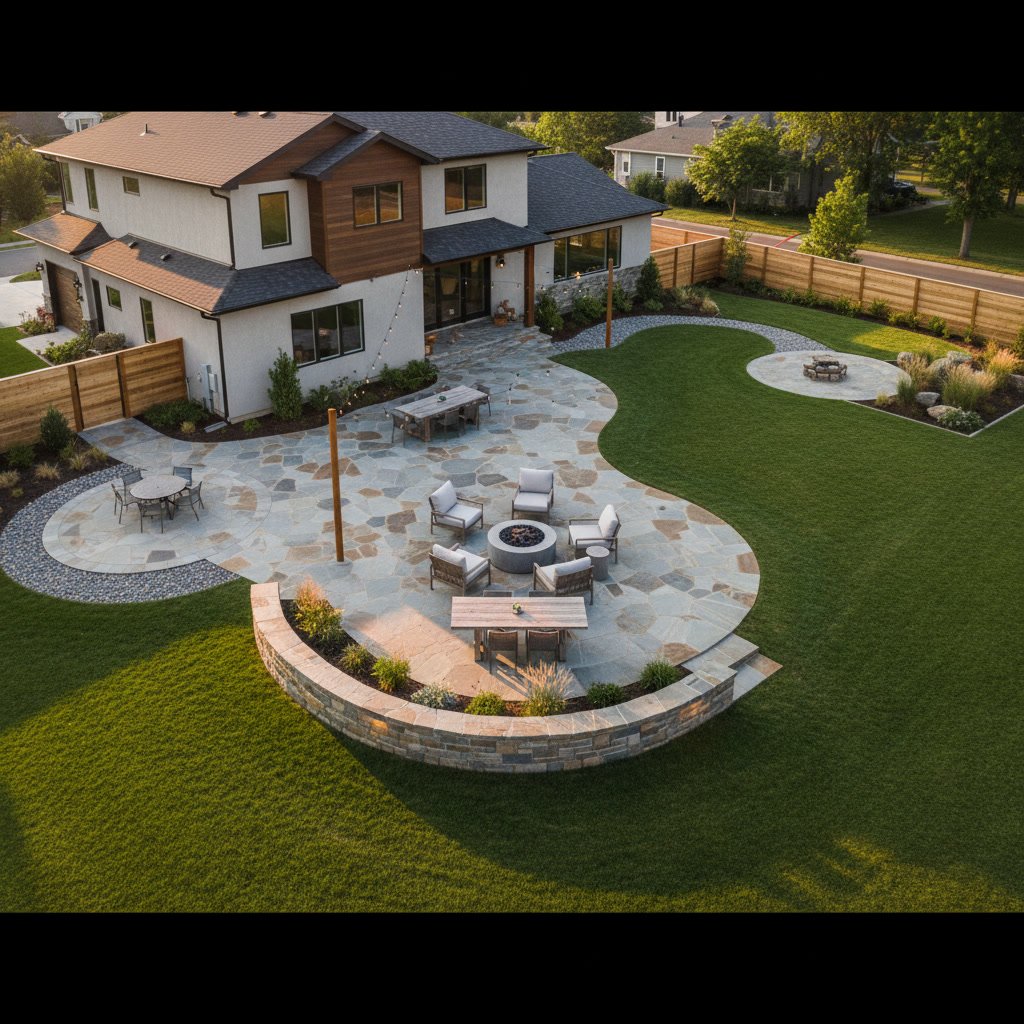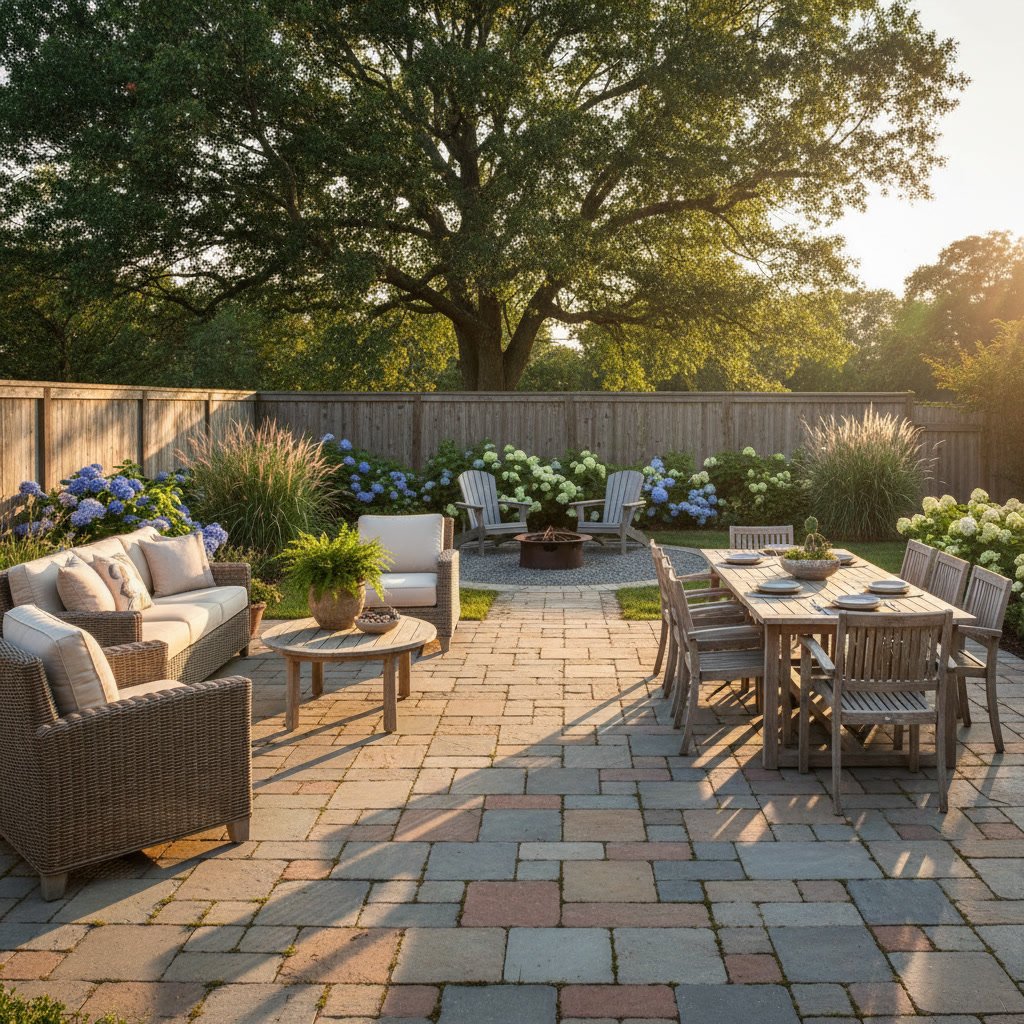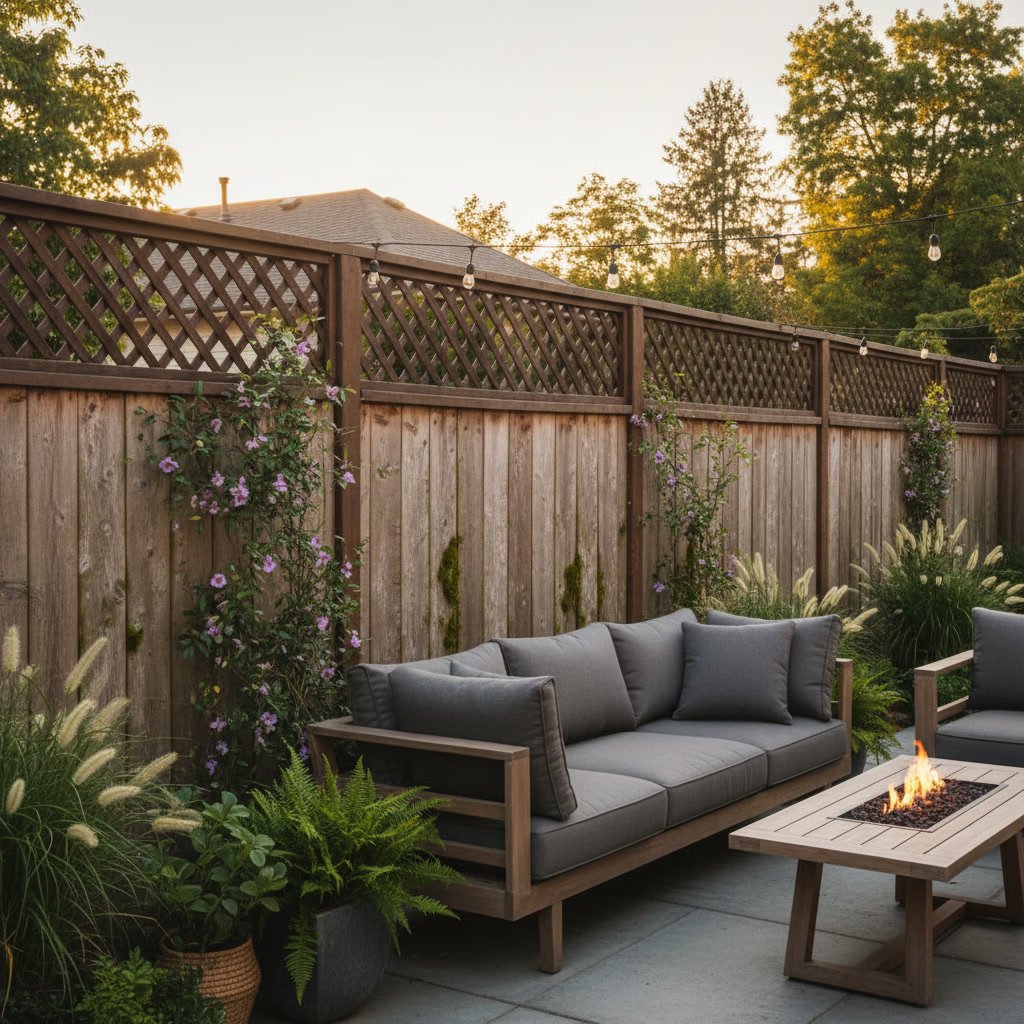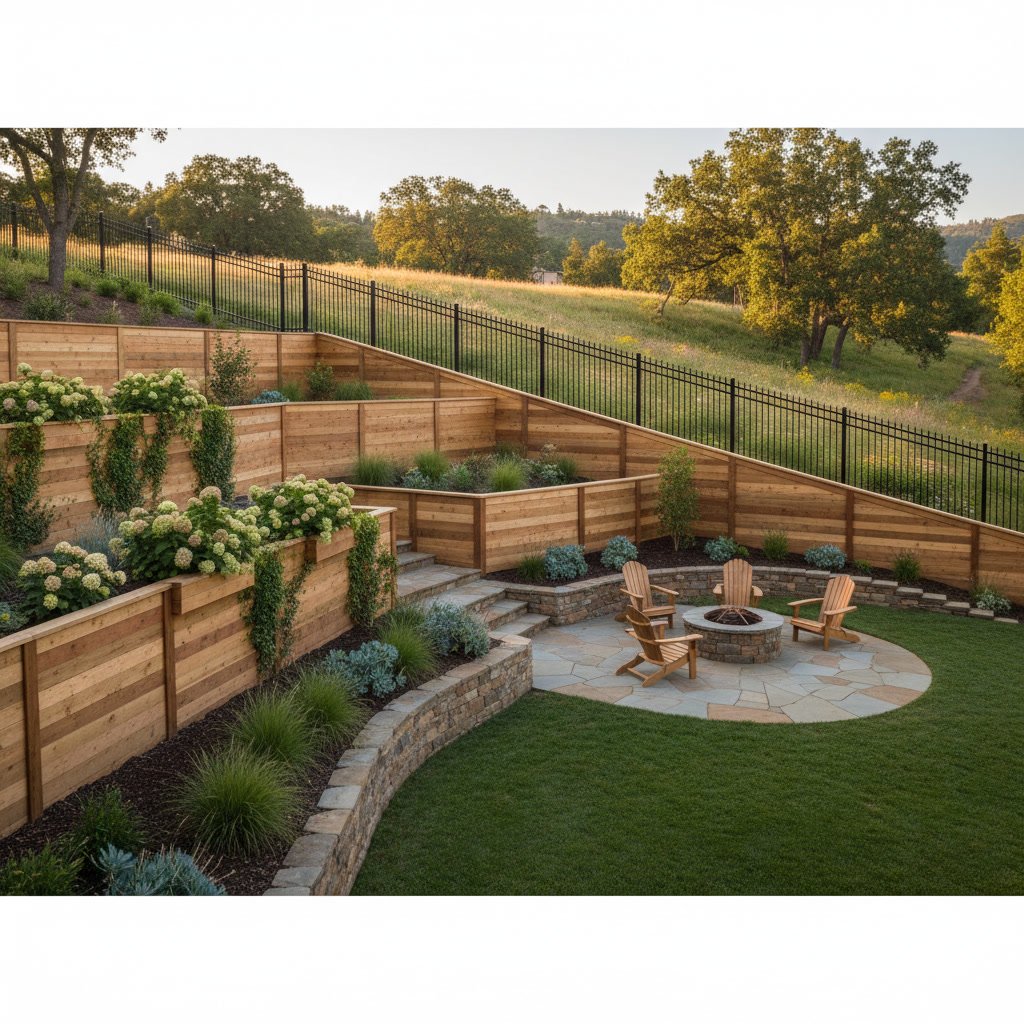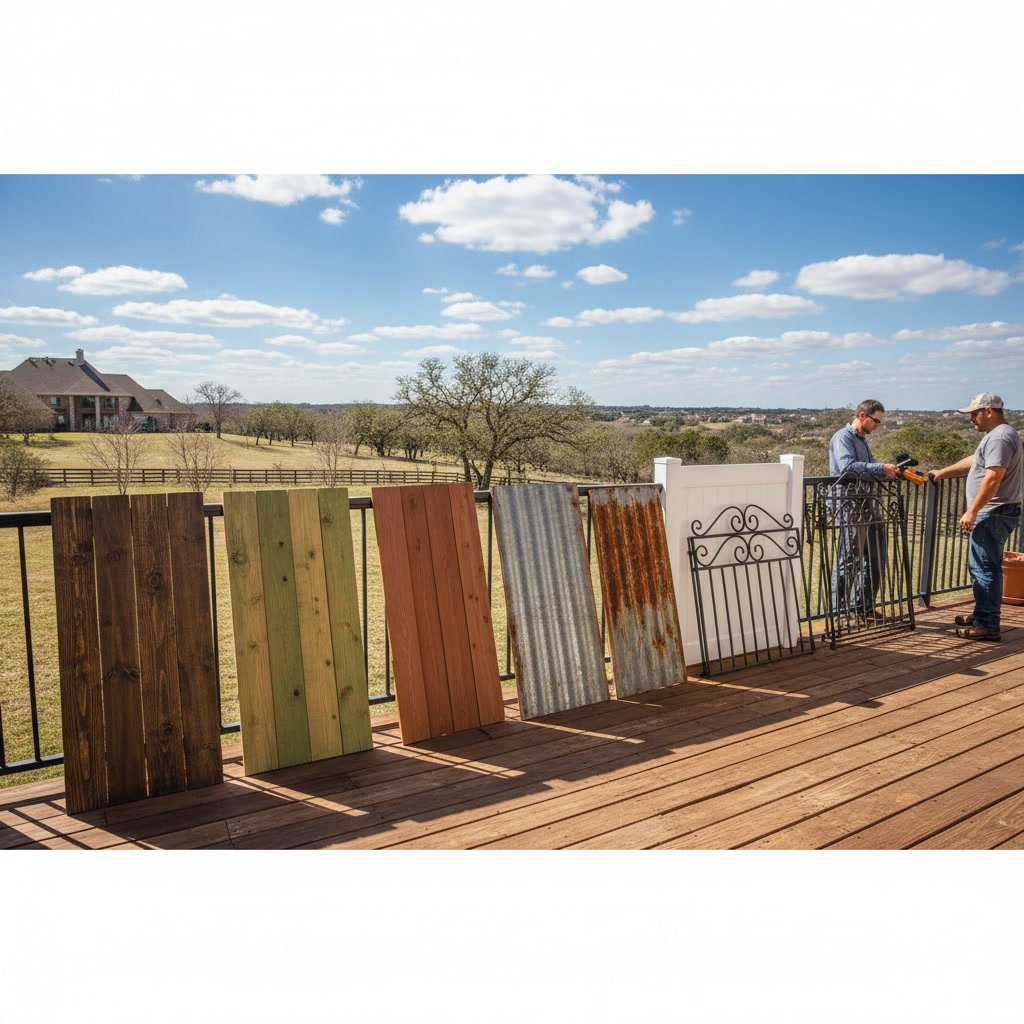
Selecting the right patio surface depends on your climate, maintenance preferences, budget, and how you plan to use the space. When you choose patio material that aligns with these factors, you create a backyard that looks great and performs well for years. The most common options include concrete, natural stone, brick pavers, gravel, porcelain tile, wood, and composite decking, each offering distinct advantages and tradeoffs.
Why Your Patio Material Matters More Than You Think
The material you select determines how your patio handles Texas heat, freeze-thaw cycles, water drainage, staining, and daily wear. A poorly chosen surface can crack within two years, absorb stains from barbecue grease, or become dangerously slippery when wet. The right choice supports furniture weight, resists fading under intense sun, and requires minimal upkeep while complementing your home’s architecture.
Understanding Your Backyard Conditions Before You Decide
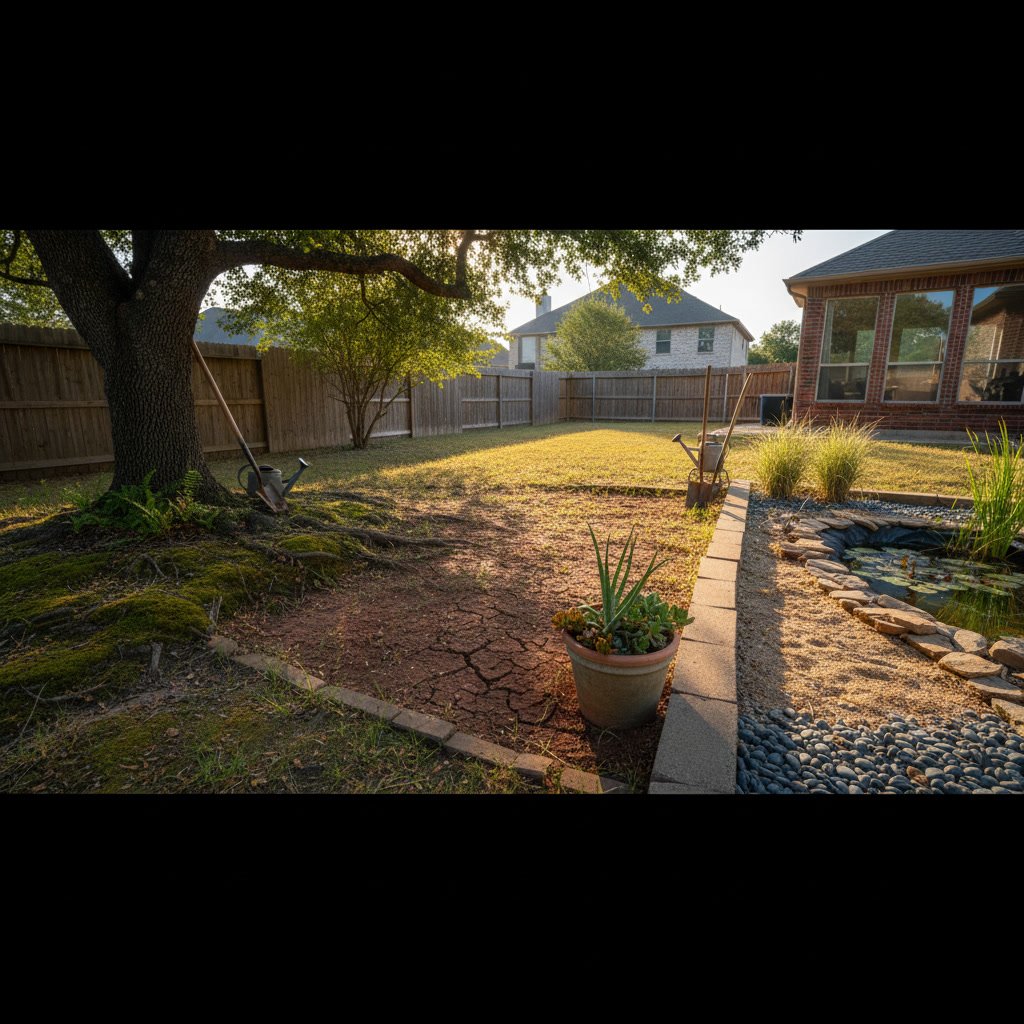
Start by evaluating your soil type, drainage patterns, and sun exposure. Clay-heavy soil expands and contracts with moisture changes, which can shift or crack rigid materials like poured concrete. Observe where water pools after rain. Patios need proper grading and a stable base to prevent settling. South-facing yards in Texas receive intense afternoon sun that can make dark materials uncomfortably hot to walk on barefoot. Shade coverage affects both temperature and algae growth on certain surfaces.
Concrete Patios Offer Versatility and Value
Poured concrete remains the most budget-friendly option at roughly $6 to $12 per square foot installed. It handles heavy furniture, fire pits, and outdoor kitchens without issue. You can stamp, stain, or score concrete to mimic stone, brick, or tile at a fraction of the cost. The downside is cracking, especially in areas with shifting soil or temperature swings. Concrete also absorbs oil and food stains unless sealed every two to three years. For a modern, industrial look or a base layer under pavers, concrete performs well.
Natural Stone Brings Timeless Beauty and Durability
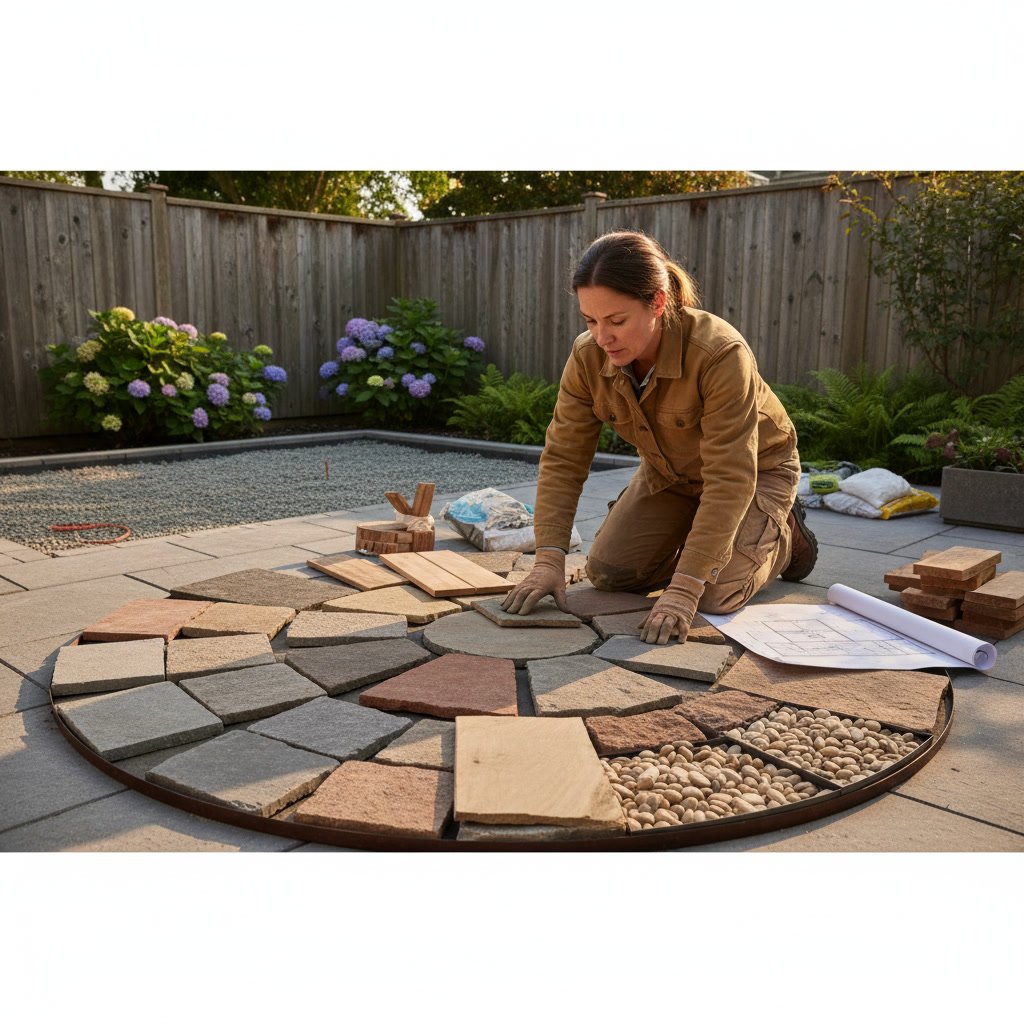
Flagstone, bluestone, limestone, and travertine deliver unmatched aesthetic appeal and last decades with minimal maintenance. Natural stone stays cooler underfoot than concrete in summer heat, making it ideal for pool decks and barefoot areas. Prices range from $15 to $30 per square foot installed, depending on the stone type and thickness. Irregular flagstone requires more labor to fit pieces together, while cut bluestone installs faster with uniform joints. Stone surfaces can become slippery when wet or covered in algae, so choose textured finishes for high-traffic zones.
Brick and Concrete Pavers in Allen Carrollton Dallas Frisco Lewisville Little Elm McKinney Prosper The Colony El Plano
Pavers offer flexibility that solid slabs cannot match. Individual units shift slightly with soil movement without cracking, and you can replace damaged pieces without redoing the entire patio. Brick pavers bring traditional charm and cost $10 to $20 per square foot installed. Concrete pavers come in endless colors, shapes, and patterns at $8 to $18 per square foot. Both options require a compacted gravel base and edge restraints to prevent shifting. Polymeric sand between joints resists weeds and ant hills better than regular sand. In the Dallas-Fort Worth region, pavers handle temperature fluctuations and occasional ice better than monolithic concrete.
Comparing Cost, Lifespan, and Maintenance Across Top Materials
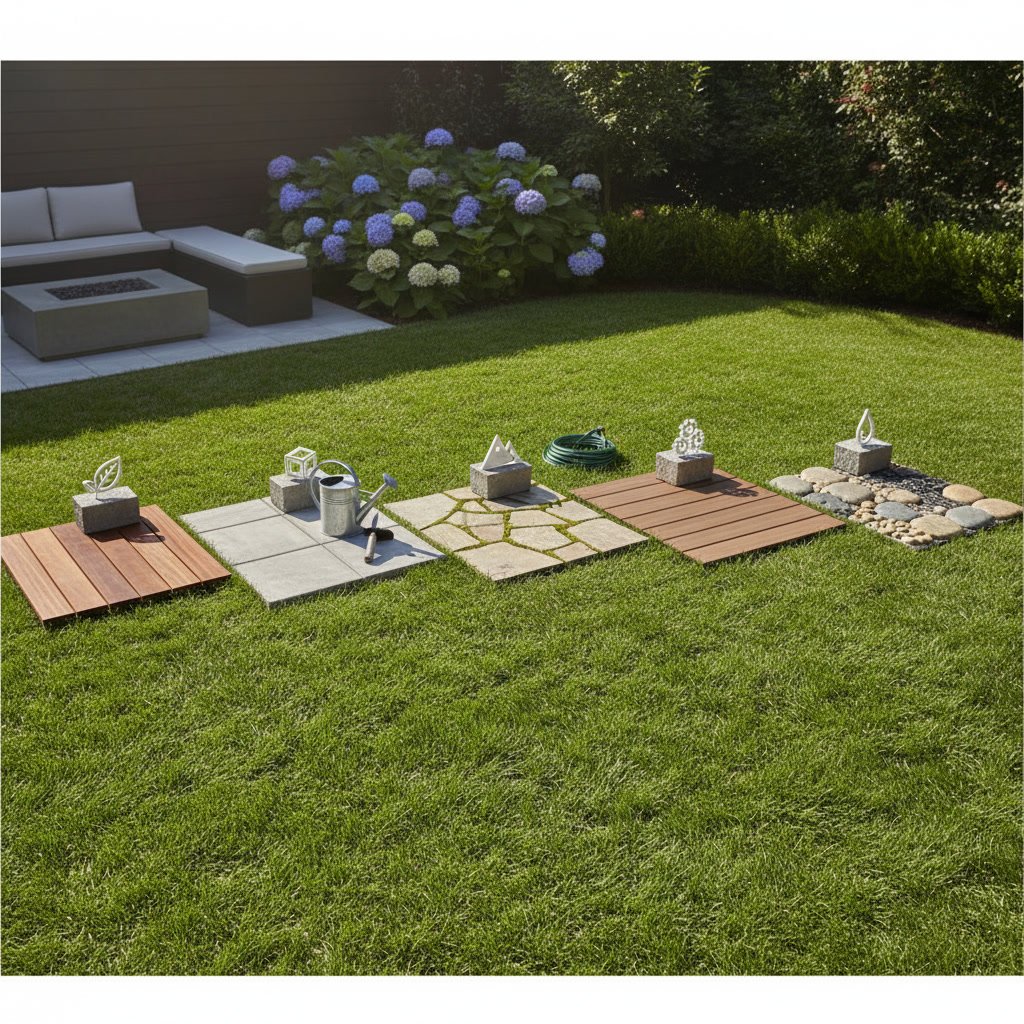
Poured concrete costs the least upfront but may need resurfacing or repair within 10 to 15 years. Natural stone costs more initially but can last 50 years or longer with simple cleaning. Pavers fall in the middle for both cost and longevity, typically lasting 25 to 30 years. Wood decking requires annual sealing and replacement boards every 10 to 15 years, while composite decking costs twice as much but needs only occasional washing and lasts 25 years. Gravel is the cheapest option at $3 to $6 per square foot but requires regular raking and refilling as stones sink or scatter. Calculate total cost over 20 years, not just installation price, to understand true value.
Wood and Composite Decking for Elevated Patios
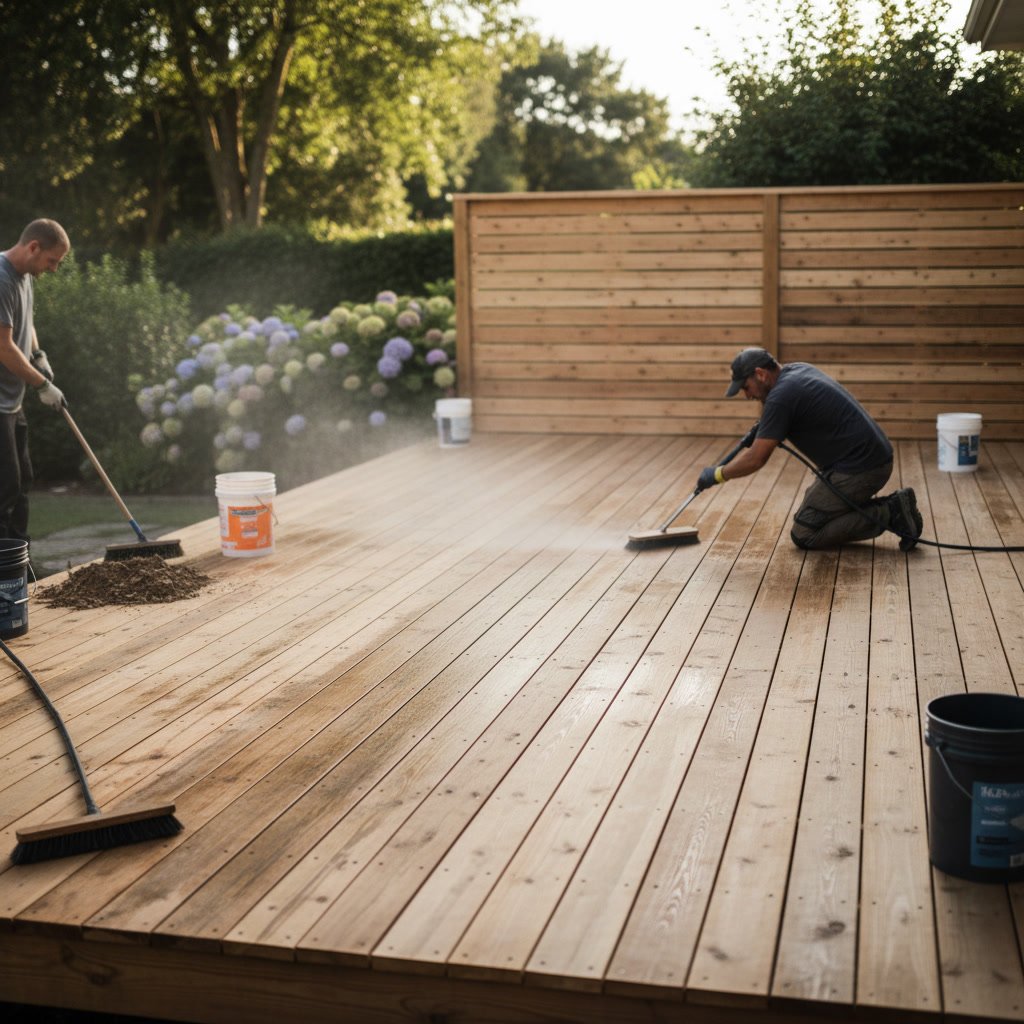
When your yard slopes or you want a patio attached to a second-story door, wood or composite decking makes more sense than ground-level masonry. Pressure-treated lumber costs $15 to $25 per square foot installed and requires staining every one to two years to prevent rot and splinters. Cedar and redwood resist decay naturally and age to a silver-gray patina, costing $25 to $35 per square foot. Composite boards made from recycled plastic and wood fiber never need staining, resist mold and insects, and cost $30 to $45 per square foot. They stay cooler than solid plastic but hotter than natural wood. Hidden fastener systems create a clean surface without exposed screws.
Gravel and Decomposed Granite for Casual Outdoor Spaces
Loose-fill materials suit informal patios, pathways, and areas around fire pits. Pea gravel, crushed granite, and decomposed granite drain water instantly and never crack. They feel soft underfoot and cost little to install. The tradeoff is maintenance. Gravel migrates into lawn areas, gets tracked indoors, and needs replenishing as it sinks into soil. Furniture legs sink into loose stone, making chairs wobble. Edging made from metal, wood, or stone keeps gravel contained. Decomposed granite compacts into a firmer surface than pea gravel and works well under bistro tables. These materials excel as budget-friendly fillers between stepping stones or as bases for container gardens.
Porcelain Tile for Modern Outdoor Living Rooms
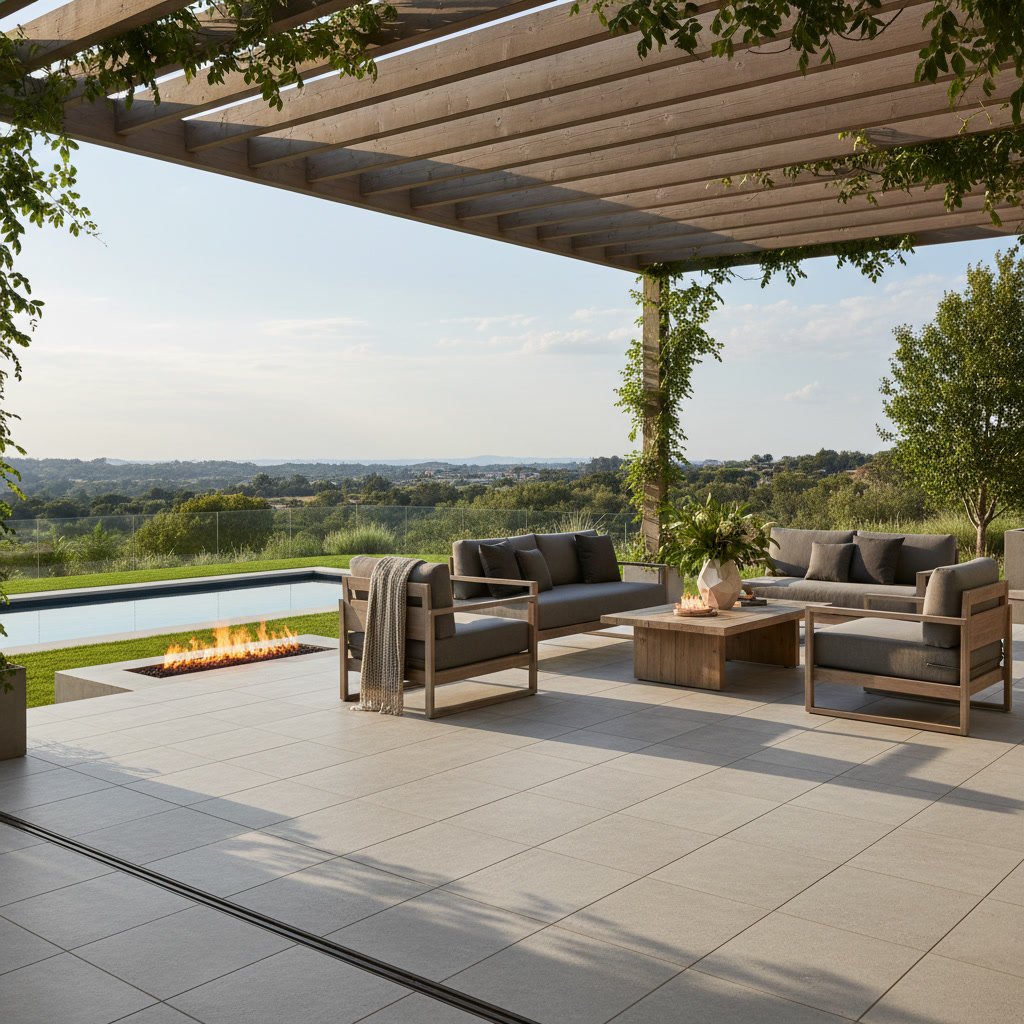
Large-format porcelain pavers mimic marble, wood, or concrete with photographic precision. They resist stains, scratches, and fading better than any natural material. Porcelain stays cooler than concrete in direct sun and cleans with just a hose. Prices start around $12 per square foot for basic styles and climb above $30 for premium designs. Installation requires a level concrete base and specialized mortar rated for outdoor use. Grout lines can crack if the base shifts, so proper preparation matters. Porcelain tiles work especially well for covered patios and outdoor kitchens where you want an indoor look with outdoor durability.
Matching Your Material to How You Use the Space
A dining patio needs a smooth, level surface that keeps chair legs stable. Pavers, concrete, or porcelain tile work best. A lounge area around a pool benefits from cool, slip-resistant stone or textured concrete. Outdoor kitchens require non-porous surfaces like sealed concrete, porcelain, or granite that resist grease and heat. Play areas for kids should avoid hard materials like flagstone that cause injuries from falls. Composite decking or rubber pavers cushion tumbles. If you entertain large groups, choose materials that handle foot traffic without showing wear. Stone and pavers age gracefully, while wood decking shows scratches and dents more quickly.
Building a Patio That Lasts in North Texas
The foundation determines patio longevity more than the surface material. Excavate at least four to six inches below finished height. Spread landscape fabric to block weeds. Add four inches of crushed limestone or decomposed granite, compact it with a plate tamper, then add one to two inches of leveling sand for pavers or stone. Slope the surface one-quarter inch per foot away from your house to drain water. For concrete slabs, use rebar or wire mesh to prevent cracking and include control joints every eight to 10 feet. Capital D LLC handles base preparation, drainage grading, and material installation to ensure your patio withstands Texas weather extremes. Skip these steps and even premium materials will fail within a few seasons.
Your patio material should match your budget, maintenance willingness, and design vision while standing up to local climate conditions. Concrete offers affordability, stone provides lasting beauty, and pavers balance cost with flexibility. Each option performs well when installed correctly over a properly prepared base. Consider how you will use the space daily, not just how it looks in photos.
Capital D LLC builds custom patios throughout the Dallas-Fort Worth area using materials selected for performance and style. Whether you prefer the clean lines of poured concrete or the character of natural stone, our team handles design, grading, and installation from start to finish. Reach out at +19722079516 to discuss your backyard project and get a detailed estimate based on your specific site conditions and material preferences.